John Dryden Potts (1872-1941), John's great grandfather, was born on the 11th August 1972. His father Thomas Potts was living with his widowed mother, Jane and their servant Dorothy. Thomas’s sister Margaret had married William Dryden in 1854, so my guess is that when it became obvious that his younger sister Dorothy, some 20 years younger, wasn’t going to find anyone to marry she was sent to his brother-in-law, Thomas, to keep house for him and his aged mother.
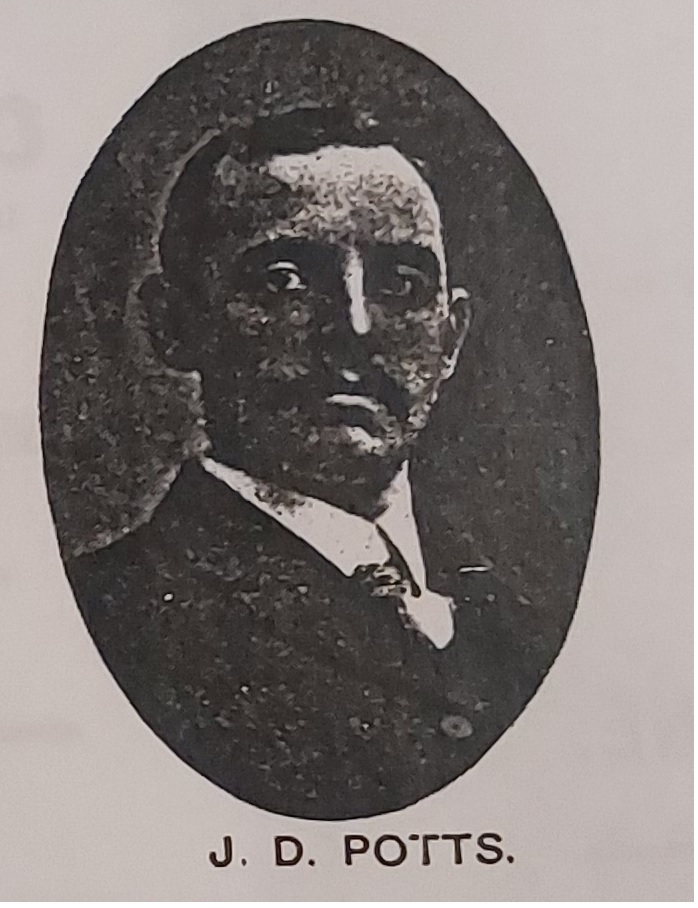
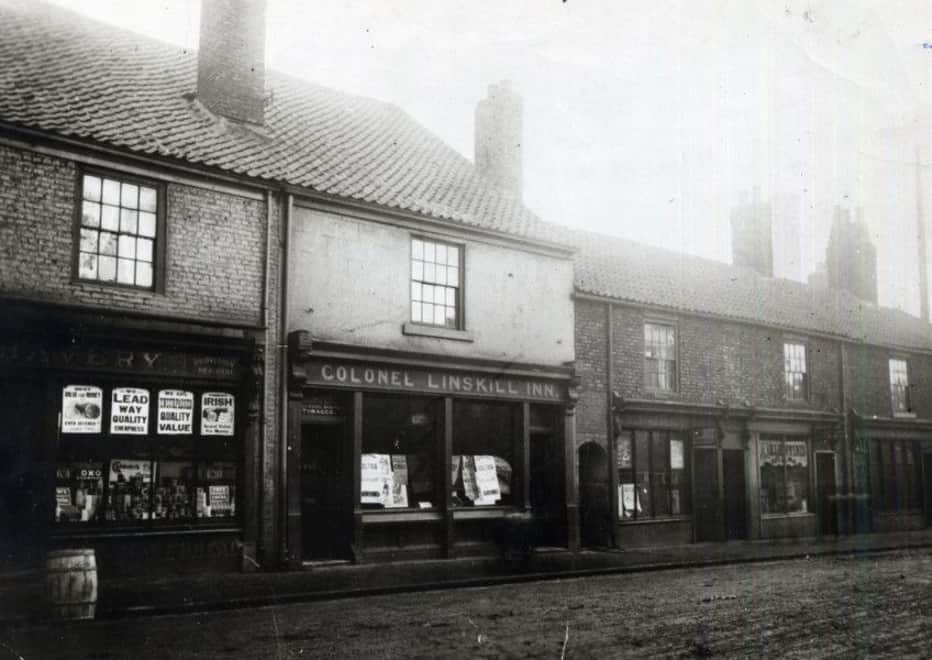
Although the Drydens were based in South Shields and the Potts family on the north bank of the river they were connected by trade. Each were blacksmiths, specialising in the making of chains for the relatively new iron-hulled ships, which had been pioneered on the Tyne in the first half of the 19th century. However, in the Ward’s Trade Directory of 1867 Thomas Potts was listed as a “licensed victualler” at the Colonel Linskll Inn; in other words he was running a public house, of which there were over 200 in the borough of Tynemouth at that time. This was confirmed in the 1871 census. I’m not sure what prompted the change from chain making but at around that time William Dryden, Thomas’s sister Margaret and their family moved from Tynemouth where William had been working to Monkwearmouth, near Sunderland and then on to Leeds, so perhaps the demand for specialised blacksmithing had declined.
This area of North Shields has been redeveloped so the pub no longer exists at 17 Charlotte Street; in the 20th century a new Colonel Linskill Inn was built further down the same street but closed in 2015. The inn was named after a local man who had raised a force of 500 local men to defend Tynemouth in case of a French invasion in the late 18th Century.
So to this establishment Dorothy Dryden had arrived in her late teens or early twenties and found herself pregnant by Thomas, who was in his early forties. John Dryden was born in the August of 1872, his parents married in the November of the same year. An inauspicious start to life, which wasn’t going to get better. A sister, Jane, was born in 1873 but she died in 1877; Thomas, their father had died in January 1874, aged about 44 still running the inn; Thomas’ mother, also Jane, died in December 1874, aged about 80, so Dorothy, still in her 20s, was left with the young John Dryden and the Colonel Linskill Inn.
There is some conflicting evidence with regard to Thomas Potts’ occupation; on the census in 1871 he is running the Inn; on John Dryden's birth certificate Thomas’ occupation is ‘chain maker’; on his probate record he an “innkeeper”; so is he holding the license, which by law at that time (I think) Dorothy could not, but was she running the Inn and Thomas still making chains? Against that argument is that there is evidence that Dorothy was unable to write her own name at her wedding so could she run a business?
As a widow Dorothy could inherit the license and for a couple of years she continued to run the Inn but in March 1876 she married John Reay, a widower, and gained two children from John Reay's first marriage:- Jane, who was a year older than John Dryden, and John W., who was a year younger. Dorothy and John Reay would have three other children – Nicholas Douglas (known as Nichol), Thomas and Ann Alice. My mother remembered “Uncle Nichol” who worked on the railways. Dorothy died in December 1901, but was buried with Thomas Potts rather than John Reay.
John Dryden became an apprentice printer with W.J. Potts (see page on Potts the printers ) which probably began when he was 14 and lasted seven years. He had risen to the rank of compositor, a highly skilled role within the printing process, when in October 1897 he married Elizabeth Jane Gray, a teacher from Tynemouth. They were both about 25 years old. Elizabeth and her sister Ethel were born in North Shields but their father George, a sailor, came from Rochester in Kent. Mum was aware that Elizabeth Gray, her grandmother, made trips to London and she wondered why. The answer is that Ethel had returned to Kent so Elizabeth went to visit her sister and other family members; I have been in contact with Ethel’s descendants and their information is included in my database.
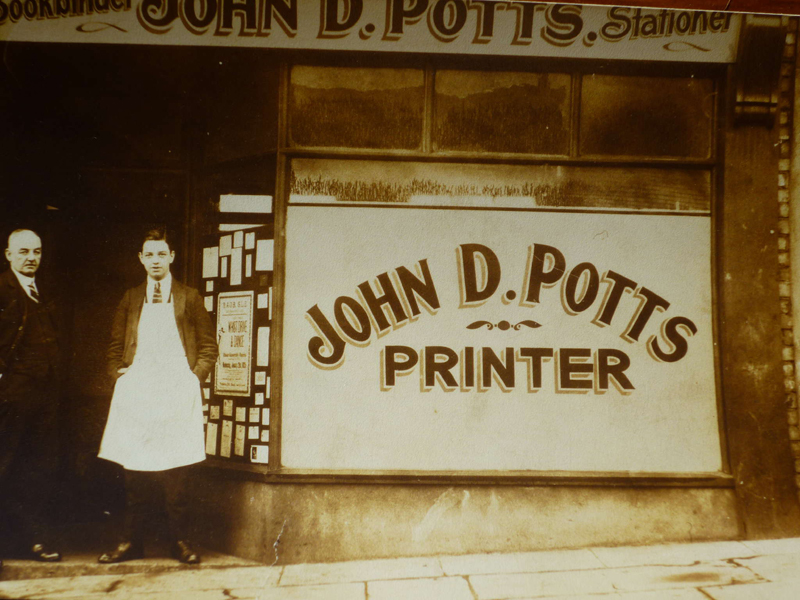 Printer’s Federation. He was a founding member of the Collingwood Bowling Club and a vice-president of the Tynemouth Bowling Club; and a member of the Tynemouth Conservative Club. He was also involved with two organisations which, through today’s eyes seem a little quaint, were and still are involved with seeking to help the less privileged in society - the Ancient Order of Foresters,